
This post may contain affiliate links. Please read my disclosure policy for details.
As an Amazon Associate, I earn from qualifying purchases.
What is Stainless Steel?
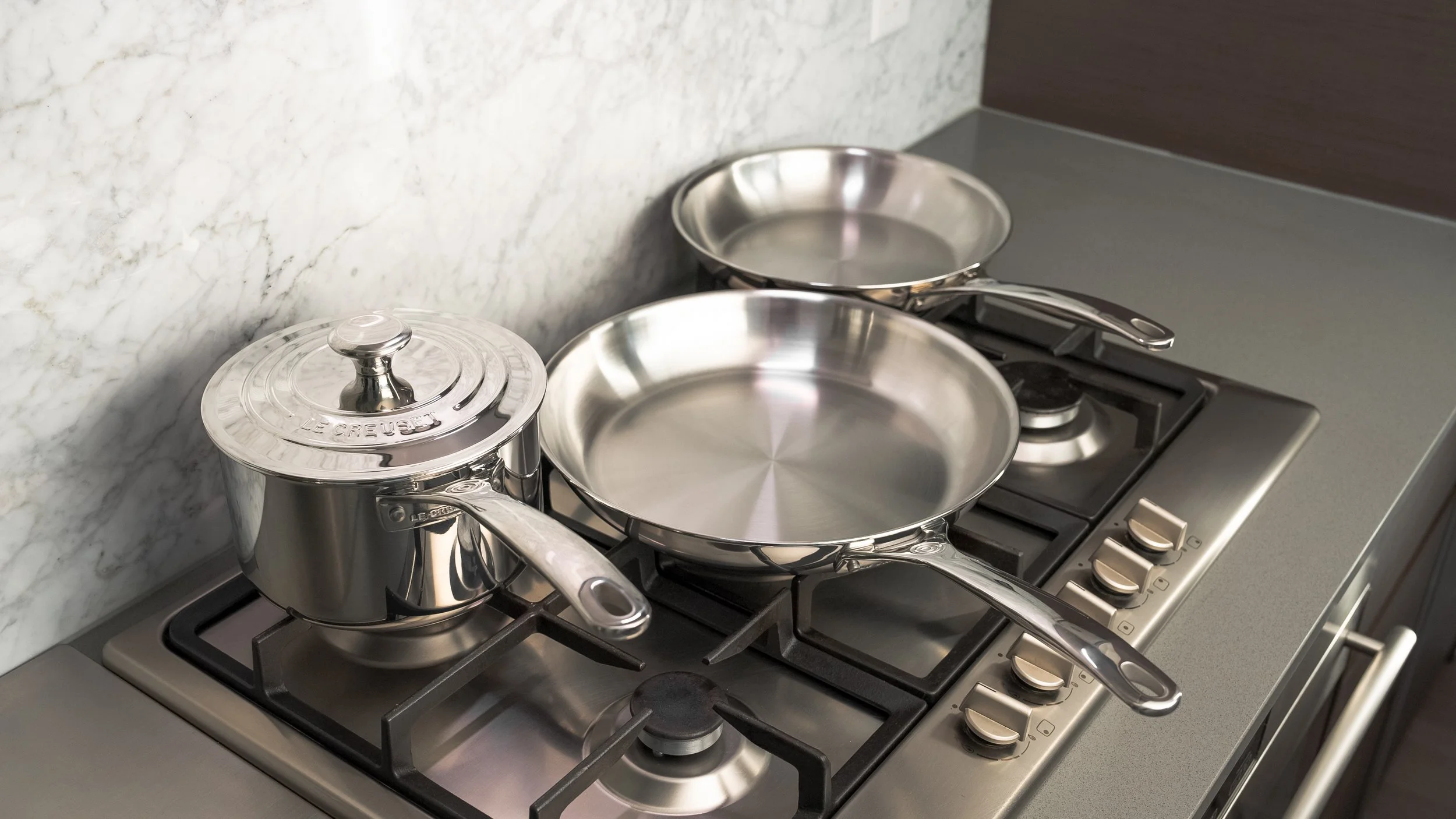
Stainless steel is an alloy made primarily of iron, with a mixture of chromium (at least 10.5%) and often nickel, which provides its resistance to rust and corrosion. The chromium in the alloy reacts with oxygen to form a thin, stable layer of chromium oxide on the surface, preventing further corrosion and giving stainless steel its characteristic shine.
Why Use Stainless Steel in Cooking?
Durability:
Long-Lasting: Stainless steel is highly durable and resistant to scratching, denting, and cracking, making it ideal for everyday use.
Heat Resistant: It can withstand high temperatures, making it suitable for a variety of cooking methods, including searing, browning, sautéing, and boiling.
Non-Reactive:
No Flavor Transfer: Stainless steel does not react with acidic or alkaline foods, ensuring that flavors remain true to the ingredients used.
Safe for All Ingredients: You can cook a wide range of foods without worrying about off-flavors or harmful chemical reactions.
Versatility:
Multi-Purpose: Stainless steel cookware is suitable for a variety of cooking techniques, from stovetop to oven use.
Uniform Cooking: It often features an aluminum or copper core to enhance heat conductivity, ensuring even cooking and preventing hot spots.
Easy to Clean:
Low Maintenance: Stainless steel is relatively easy to clean and can often be washed in the dishwasher.
Stain Resistant: It resists staining and maintains its appearance with proper care.
Aesthetic Appeal:
Modern Look: The sleek, shiny appearance of stainless steel adds a modern and professional look to any kitchen.
Wide Range of Designs: Available in various designs and finishes to match kitchen decor.
How to Make Stainless Steel Non-Stick
Super easy! It’s all about temperature control and using testing indicators.
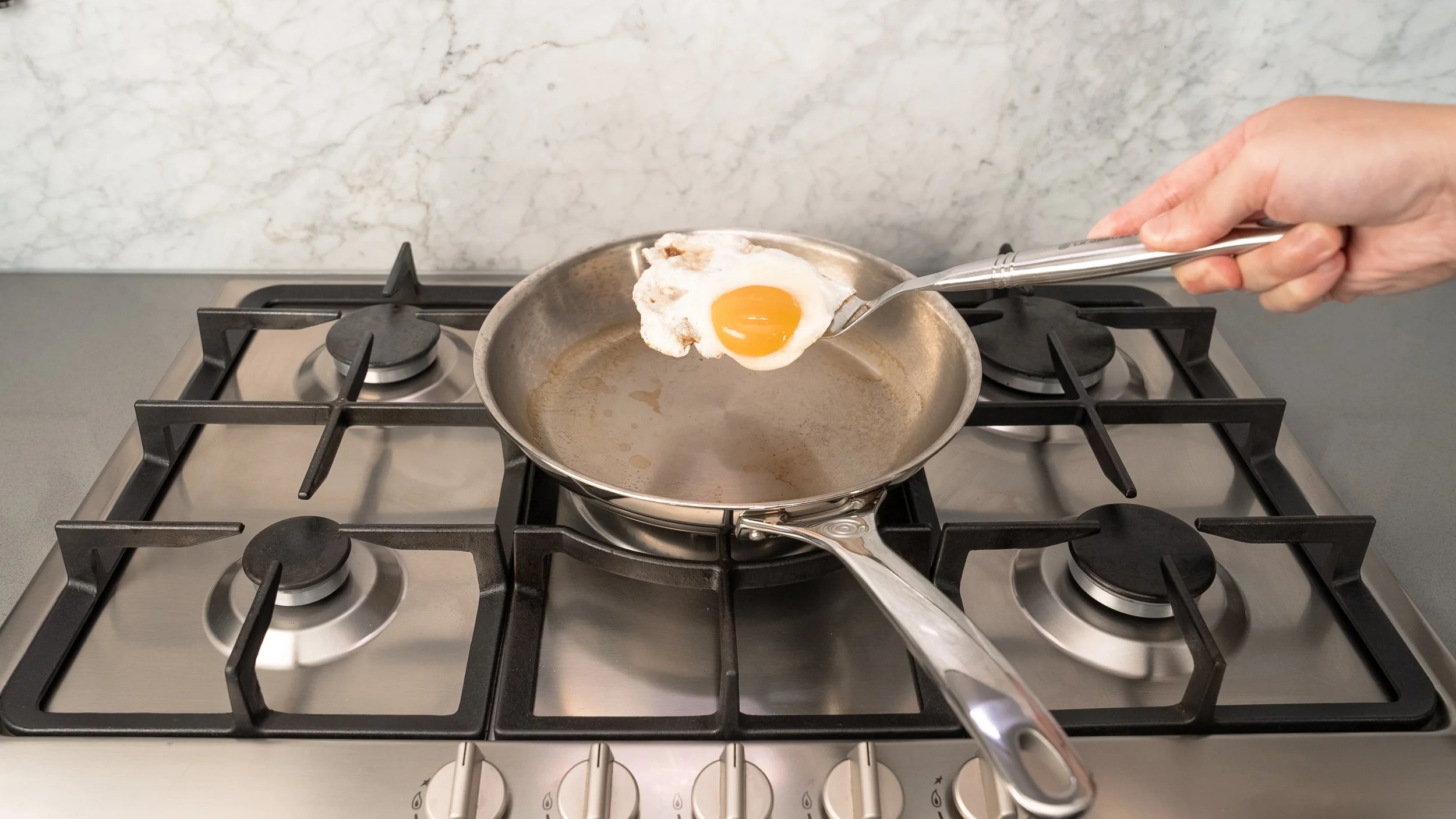
We’ll use an egg, something that everyone has cooked at least once in their lifetime, but how exactly can we get it to not stick on the final boss: stainless steel?
Here are my tips to get a perfect fried egg with maximum yield.
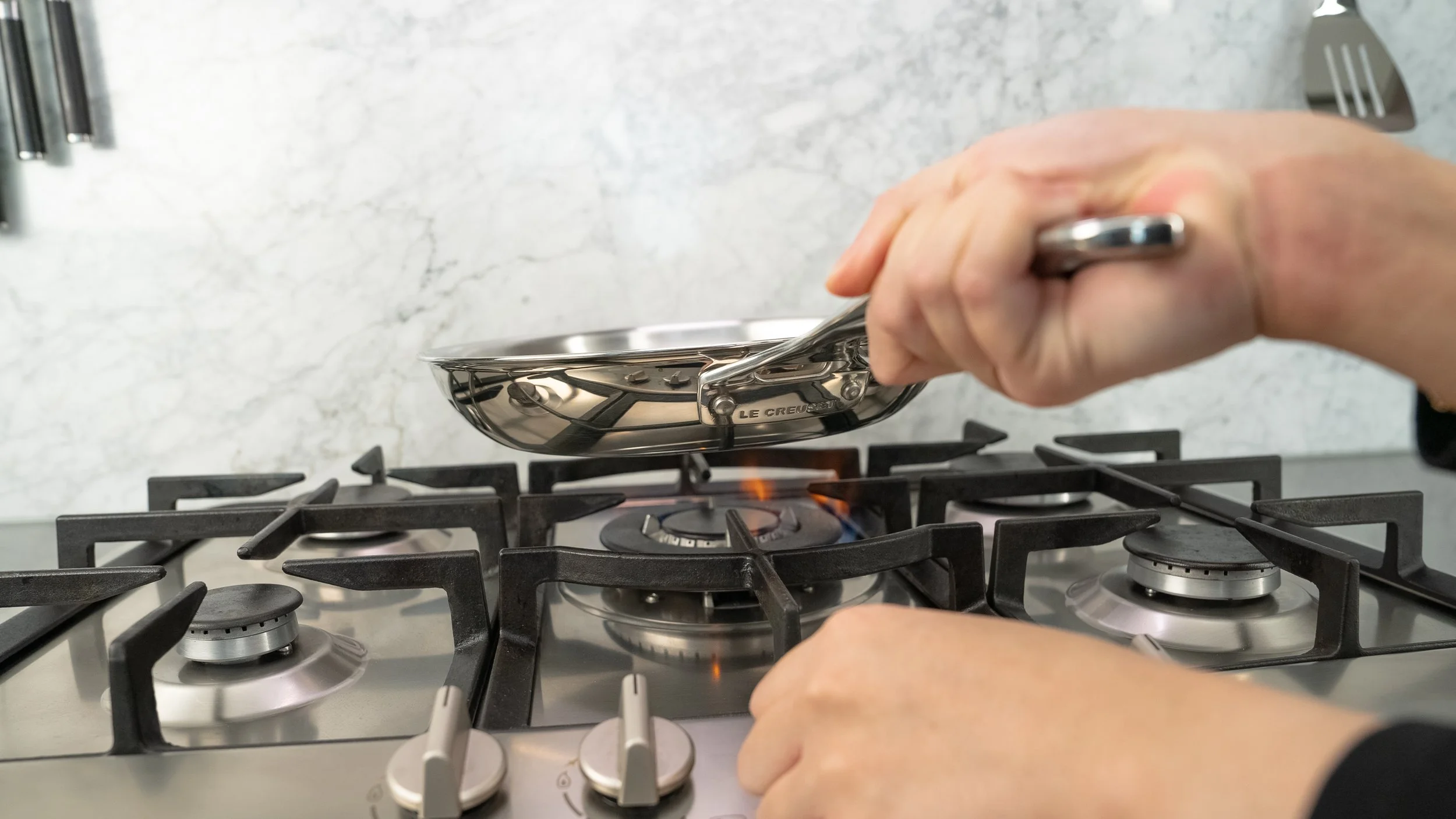
Start with a clean Stainless Steel pan and heat on medium heat.
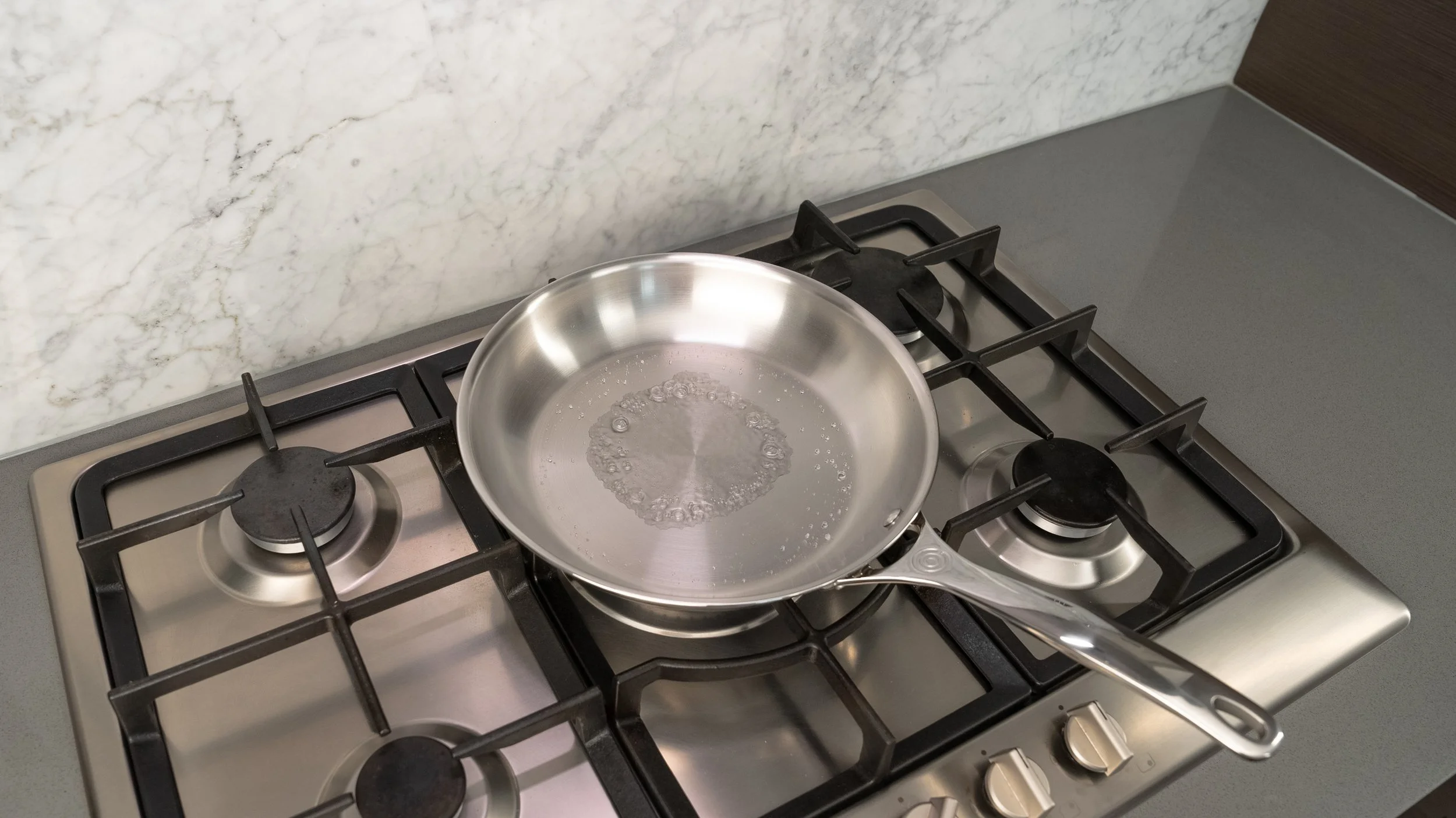
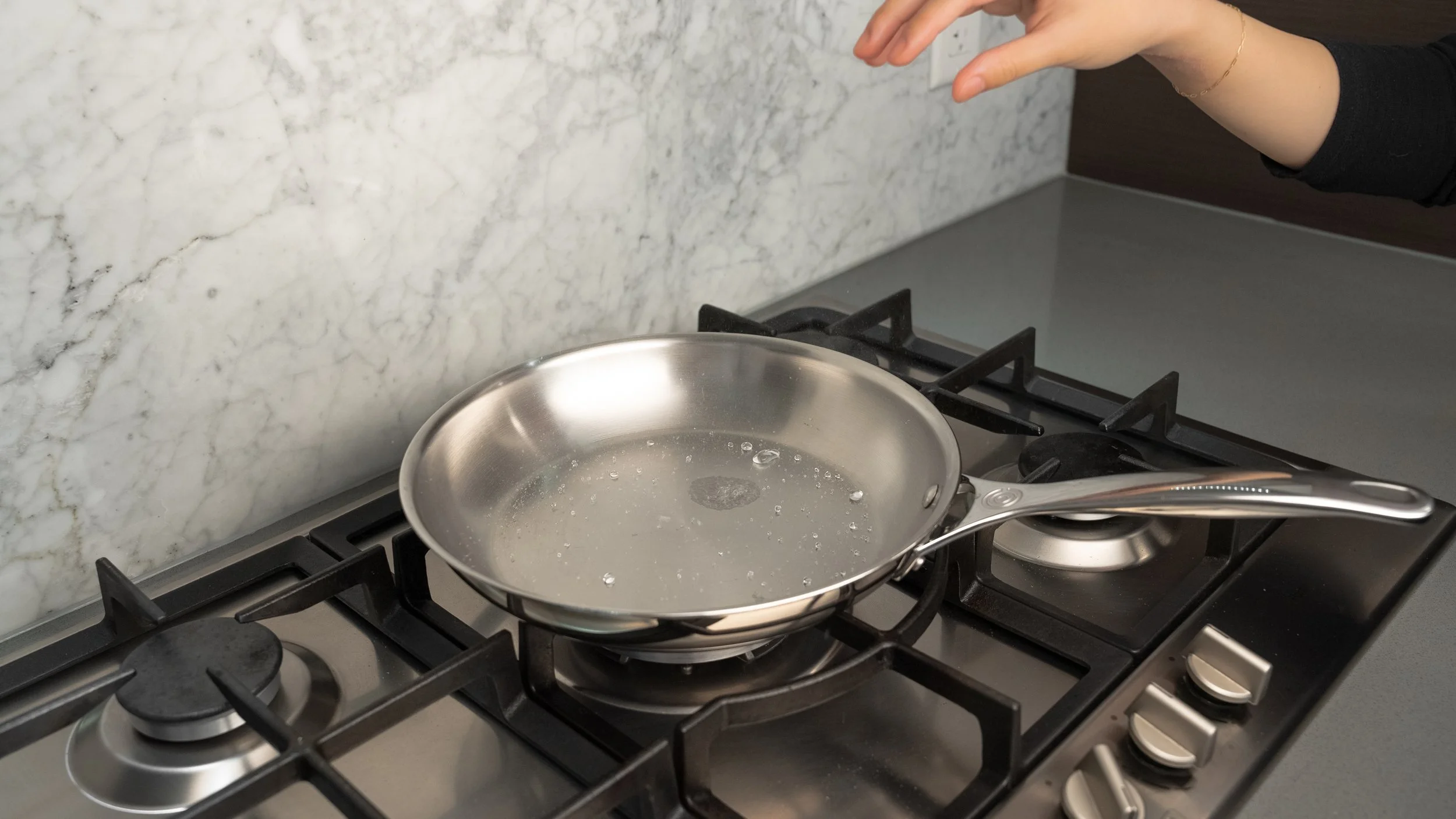
Heat for a couple of minutes and test with a little bit of water to see whether water evaporates or bounces around like mercury balls.
If water evaporates, the pan is NOT ready.
If water dances around like mercury balls, the pan IS ready.
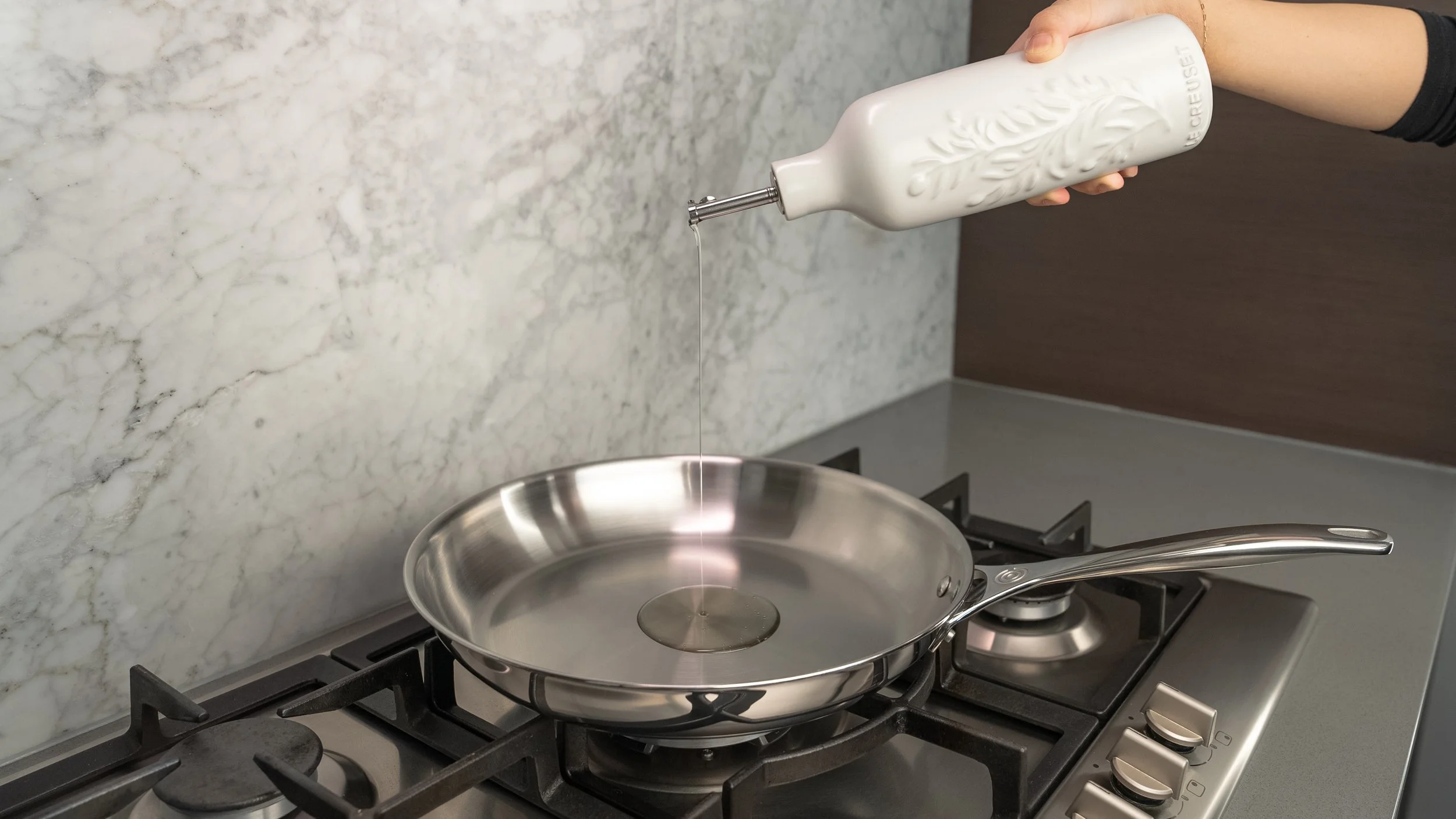
Use a neutral oil with a high smoke point. This means the oil can be heated to a high temperature before it begins to smoke and break down.
Examples of high smoke point oils: Avocado, Refined Olive, Grapeseed, Peanut, Sunflower, Canola, and Corn.
Make sure to swirl the pan if you’re cooking multiple eggs and need more surface area. Otherwise, heat oil on one part of the pan over the heat (less cleanup) and heat for 15 seconds before cracking an egg.
Using oil will prevent food from sticking on top of a perfectly heated pan.
Note: If you heat oil for too long, oil stains will start to appear. Don’t be scared; this is normal and does not affect what you cook whatsoever. It can easily be removed, and your pan will look brand new. Click to learn How to Clean Stainless Steel.
Other How-To Guides
Love the recipe?
Make sure to follow me on Instagram, TikTok, YouTube, and Pinterest to stay up to date with all of my content!
Sign up for my free newsletter to receive cooking tips & recipe updates!
If you made this recipe, send me a picture and tag it with #W2Recipes.
I would love to see your re-creations on Instagram @willhkwong.


Chicken brine is a solution of salt, water, and often other flavor-enhancing ingredients used to soak chicken before…