
This post may contain affiliate links. Please read my disclosure policy for details.
As an Amazon Associate, I earn from qualifying purchases.
Fresh Ideas Start Here
7515 Market Crossing #180, Burnaby, BC V6J 0A3
What is Sea Urchin?
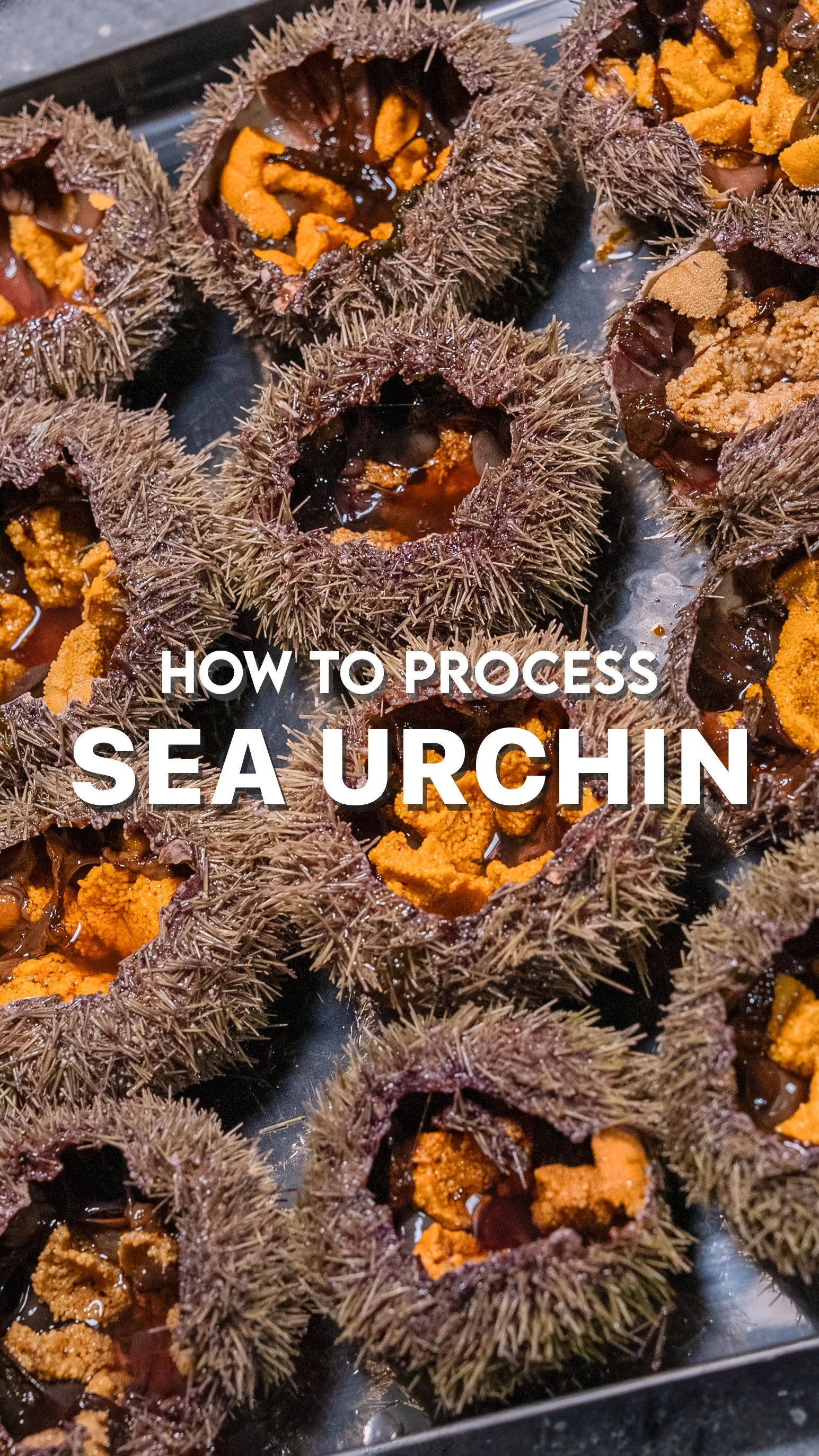
They are marine animals belonging to the phylum Echinodermata and the class Echinoidea. As you can see, their characteristics consist of an external hard, calcareous exoskeleton known as a test, which is usually covered in moveable spines. The sharpness of their spines is a defense mechanism meant to help protect themselves. They come in different sizes, colors, and shapes depending on their regions. Sea Urchins are herbivores, feeding on algae and seaweed. You’ll find seaweed inside along with the edible part, the roe (uni), which is the reason they are harvested.
Uni is a delicacy prized for its rich, creamy texture and briny, sweet flavor. It is often served in sushi or used as a gourmet ingredient in various dishes, categorized as a luxury ingredient, which I love! Having Uni in shot glasses complemented by other Japanese ingredients is one of my favorite appetizers.
There are 4 types of Sea Urchins that most people are familiar with, but there are many more species with diverse characteristics. The culinary significance of each one is their roe (uni).
Purple Sea Urchin - Found along the western coast of North America, from Alaska to Baja California. This is the most commonly harvested for Japanese cuisine.
Green Sea Urchin - Distributed in the northern Atlantic and northern Pacific Oceans. Less flavorful than the Purple Sea Urchin.
Red Sea Urchin - Native to the northeastern Pacific Ocean, from Alaska to Baja California. This species is mainly used in sushi.
Black Sea Urchin - Found in the Indo-Pacific region, particularly in Australia and New Zealand. It has distinctive black or dark purple spines and is known for grazing on kelp.
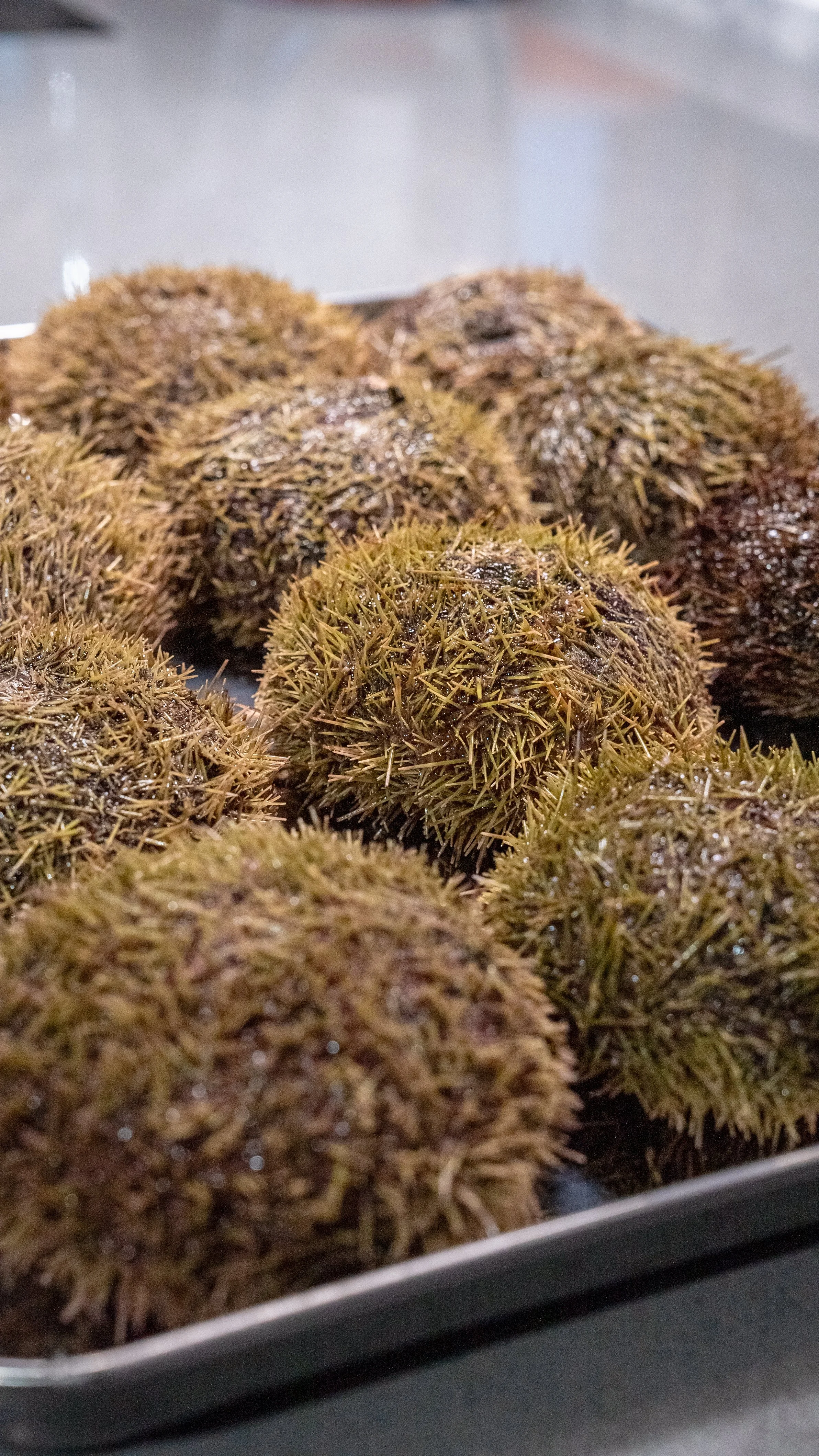
The Sea Urchins I used to demonstrate the process in the video and photos are Green Sea Urchins. These were gifted to me by Fresh Ideas Start Here (thank you again!).

Processing Sea Urchin
Sea Urchin should be processed right away to prevent spoiling the roe. Note that the roe can be different colors based on several factors including its diet, and environmental conditions. Most common colors are orange and yellow, but variations can include shades of red, green, and even purple. The color reflects the natural variations in the sea urchin’s biology and environment. For the culinary aspect, both orange and yellow sea urchin roe are highly prized for their rich, creamy texture and unique flavor profile. Oftentimes, you’ll see these colored uni used for presentation of sushi and sashimi.
Safety Precautions
Wear protective gloves to avoid getting pricked by the spines.
Use tools like scissors or shears with care to avoid injury.
Harvesting
Harvest sea urchins using a suitable tool like tongs or a special sea urchin rake.
Handle them carefully to avoid damage to the delicate roe.
Cleaning
Rinse the sea urchins in seawater to remove debris, sand, and other impurities.
Use a soft brush to gently clean the exterior.
Opening the Sea Urchin
Hold the sea urchin upside down (spines facing downward) to expose the mouth, called Aristotle's lantern.
Carefully cut around the top of the shell using scissors or shears. Be cautious not to cut too deep to avoid damaging the roe.
Removing the Top Shell
Lift off the cut portion of the shell to reveal the inner contents, including the roe and other parts.
Be mindful of any liquid inside the sea urchin; this is often seawater.
Extracting the Roe
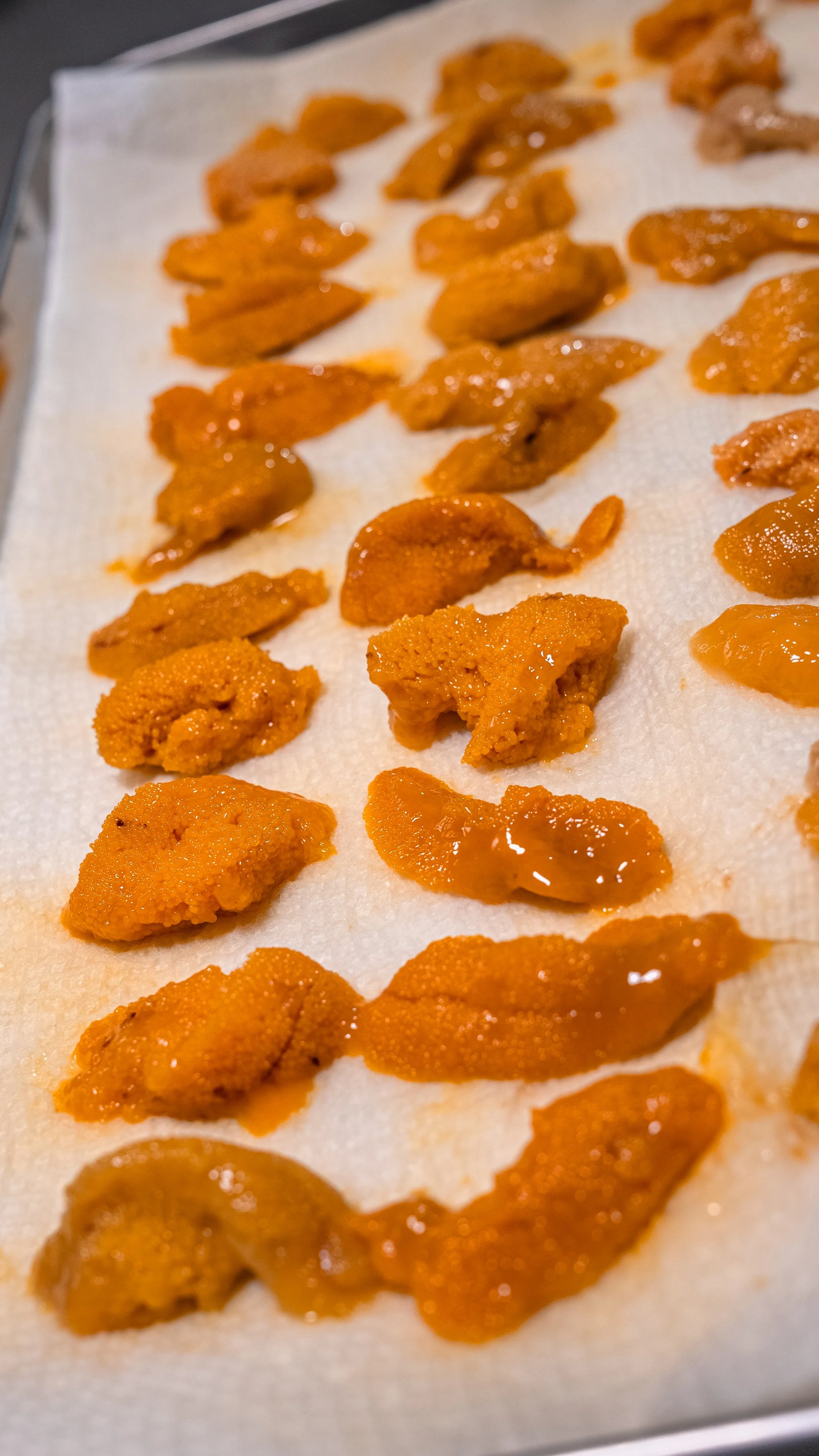
Locate the bright orange or yellow roe inside the sea urchin. It is typically found in five sections around the mouth.
Gently scoop out the roe with a spoon or a specialized sea urchin tool into salt water.
Cleaning the Roe
Rinse the extracted roe in clean, cold seawater to remove any remaining debris or impurities.
Gently drain excess water.
Serving or Storing
Serve the fresh sea urchin roe immediately as a delicacy, perhaps as sushi or sashimi.
If not serving immediately, store the roe in the refrigerator in an airtight container until ready to use. Freshness is key for the best flavor.
Discarding Inedible Parts
Dispose of the inedible parts of the sea urchin, including the spines and the internal organs, appropriately.

Check out their Website - https://eatfish.ca/


If you live in Vancouver, you may know it’s difficult to find Japanese A5 Wagyu. Here’s the good news!